Municipal bulk trash services in Miami-Dade County impose rigid annual limits on yard cuttings and outright reject commercial food scraps or mixed compostable refuse. This leaves property owners in mature canopy…
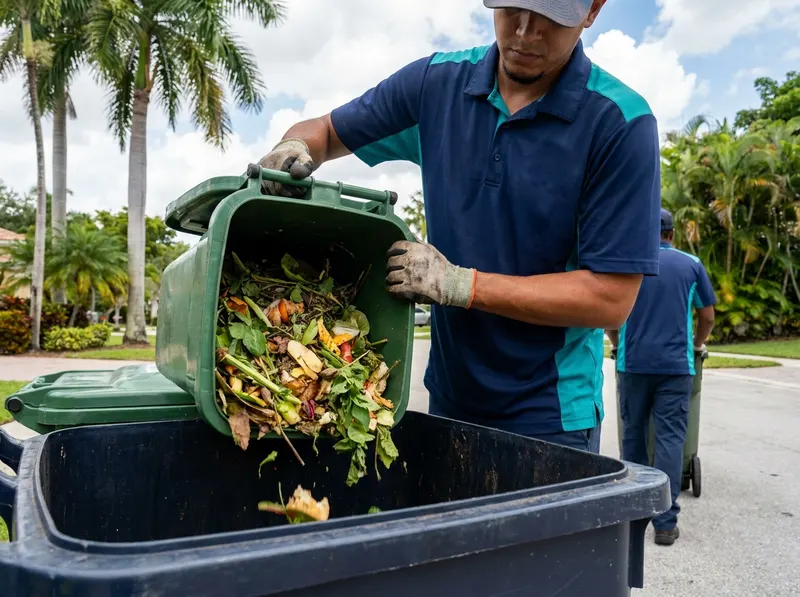
Municipal bulk trash services in Miami-Dade County impose rigid annual limits on yard cuttings and outright reject commercial food scraps or mixed compostable refuse. This leaves property owners in mature canopy neighborhoods like Coconut Grove and Morningside with rotting heaps that attract pests and trigger swift municipal code violations. Residential landscaping overhauls along Coral Way and Little Havana generate hundreds of pounds of dense, wet palm boots and trunk cuttings that exceed standard curbside container allowances within minutes. When organic matter sits in South Florida heat, high humidity accelerates anaerobic decomposition within 48 hours, producing strong odors and leachate runoff. Direct organic waste and composting collection bypasses municipal waiting periods by placing designated containers directly on your property for rapid clearance.
Selecting dedicated collection over standard mixed trash dumpsters provides significant structural and financial advantages. Standard municipal disposal burns or buries green debris, whereas segregated organic recovery keeps processing costs lower by eliminating mixed-waste sorting fees. The practical trade-off is contamination control: compostable loads must remain free of treated lumber, construction plastics, wire ties, and standard garbage bags. If a property owner in the Design District or Wynwood is gutting a restaurant kitchen alongside drywall remodeling, running separate containers is essential. Mixing five pounds of plastic wrapping into an organic container downgrades the entire three-ton haul into general municipal solid waste, which triggers landfill disposal rates rather than clean organic diversion fees.
Collection logistics require careful protection of Miami residential surfaces. Heavy organic loads, particularly rain-soaked sod, hardwood limbs, and wet organic prep waste, exert immense downward pressure on access points. Dispatch units utilize protective wooden underlayment beneath steel roller wheels and outriggers, ensuring that historic brick pavers in Brickell or decorative stamped concrete pads in Edgewater and Allapattah suffer zero rutting, cracking, or grease staining. Step 1: Call local dispatch to select a container capacity from 10 to 30 cubic yards based on estimated green tonnage. Step 2: Receive the container positioned over surface-shielding ground boards during your scheduled delivery window. Step 3: Fill the container with raw compostable materials, tree cuttings, and organic waste. Step 4: Local drivers hoist the unit cleanly away for processing at certified regional composting yards, completely bypassing curbside backlogs.
Every job gets a firm, written price after a free on-site visit.
Tell us about your organic waste and composting collection job in miami and we'll send a clear, written quote, usually the same day.
 Coastal Dumpster Rental